
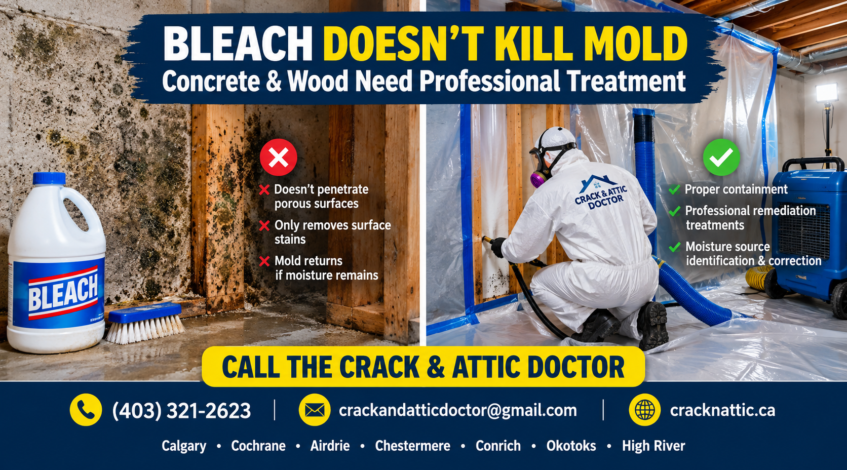
Finding fuzzy black patches on your concrete basement wall or attic roof sheathing is alarming. The most common DIY advice is simple: grab a jug of household bleach, spray the surface, and wipe it away.
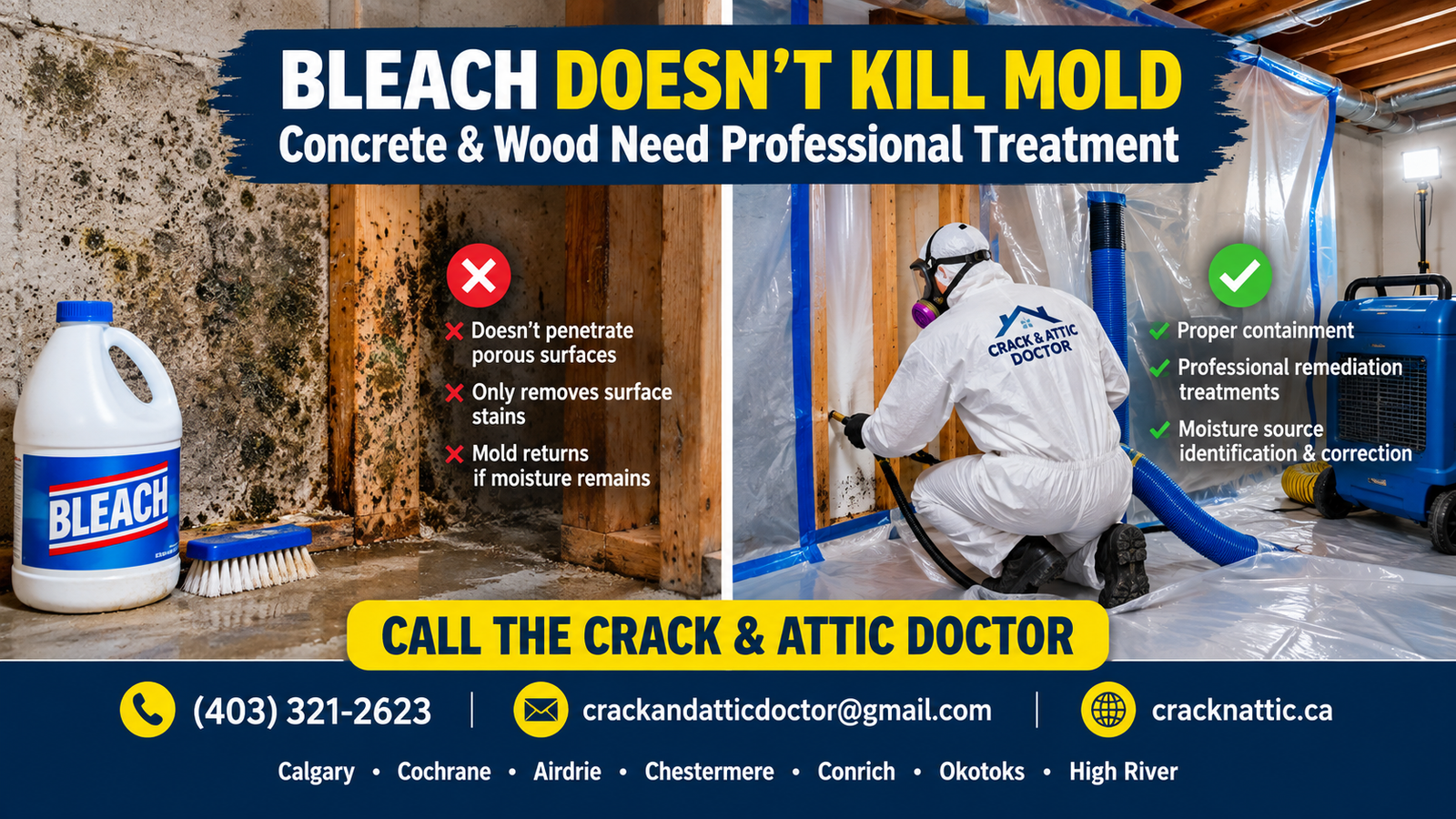
The stain vanishes within minutes, giving you instant satisfaction.
Unfortunately, using chlorine bleach on building materials does not eliminate mold. It actually makes the problem worse. Bleach removes surface color while leaving the root system alive, accelerating future colony growth.
Permanent remediation on porous surfaces requires stopping the moisture source and using penetrating botanical or commercial biocides.
1. The Chemistry of Bleach: Why It Fails on Porous Surfaces
Household bleach (sodium hypochlorite diluted in water) works well on smooth, non-porous surfaces like porcelain bathtubs or glazed ceramic tiles. On porous materials like wood, concrete, and drywall, its molecular structure fails completely:
-
Chlorine Molecule Size: The chlorine molecule is chemically large and possesses high surface tension. It cannot penetrate the microscopic pores of wood or concrete. It stays stranded on top, bleaching the pigment out of the surface mold.
-
Water Penetration: Household bleach is mostly water (typically 90% to 95%). Water molecules are much smaller than chlorine molecules, allowing the water to soak deep into wood grain and concrete capillaries.
-
Feeding the Roots: Mold produces deep root structures called hyphae or mycelia. When you spray bleach, the chlorine sits on the surface while the water sinks into the material. The roots consume the water, rebound rapidly, and return within weeks—often larger and more aggressive than before.
2. The Unseen Dangers of Using Bleach on Building Structures
Relying on bleach for concrete or wood mold introduces serious structural and environmental side effects:
-
Material Degradation: Bleach is corrosive. It weakens the structural lignin inside wood trusses and degrades concrete binders over time.
-
Corrosive Fumes: Mixing bleach with acidic compounds or applying it in enclosed, poorly ventilated spaces like attics or crawlspaces produces hazardous fumes that irritate the lungs and eyes.
-
Failure to Denature Mycotoxins: Bleach clears surface stains, but dead or dormant spores remain toxic. Disturbed spores continue to trigger respiratory inflammation, asthma attacks, and allergic reactions.
3. What Building Professionals Do Instead
Remediation professionals do not rely on surface oxidizers. Eradicating mold from framing and masonry requires physical removal, targeted antimicrobial chemistry, and strict moisture control:
A. Containment and HEPA Air Scrubbing
Disturbing dry mold releases millions of airborne spores into your HVAC system. Professionals isolate the work zone using 6-mil polyethylene plastic barriers under continuous negative air pressure. Industrial air scrubbers equipped with certified HEPA filtration capture spores down to 0.3 microns.
B. Mechanical Removal & Deep Extraction
Mold embedded in structural wood or rough concrete cannot simply be wiped away:
-
HEPA Vacuuming: High-efficiency vacuum systems pull loose surface spores without distributing dust into the air.
-
Abrasive Remediation: Technicians use wire brushing, sanding, or dry-ice blasting to strip the fungal roots directly out of the wood grain or concrete surface.
C. Deep-Penetrating Antimicrobial Treatments
Rather than bleach, professionals use non-corrosive, EPA-registered solutions:
-
Quaternary Ammonium Compounds: Penetrating biocides that disrupt fungal cell membranes without damaging structural fibers.
-
Thymol-Based Botanical Disinfectants: Plant-derived antimicrobials that break down microbial cell walls without releasing toxic chemical vapors.
-
Antimicrobial Encapsulants: Once surfaces dry completely, technicians apply clear or white mold-resistant sealants to lock out future colonization.
4. The Golden Rule: Eliminate the Moisture Source
Mold cannot survive without water. Cleaning framing or masonry without addressing the underlying moisture pathway guarantees reinfestation.
-
For Attic Mold: Trapped moisture usually stems from warm indoor air leaking past ceiling bypasses or blocked soffit ventilation. Eliminating attic mold permanently requires precision air sealing and continuous intake-to-exhaust airflow through comprehensive attic mold removal and insulation replacement.
-
For Concrete Basements: Seepage through foundation cracks indicates exterior hydrostatic pressure. Permanent remediation requires high-pressure polyurethane injections to seal cracks through the full wall thickness, paired with proven foundation crack repair and exterior waterproofing systems.
✅ Book Your Free Mold & Moisture Inspection Today!
Stop spraying bleach on porous building materials and feeding hidden mold colonies. Get a permanent microbial cure that protects your home’s air quality, structural framing, and property value.
Contact our certified specialists today to schedule your free mold and moisture inspection and transparent quote!
📞 Contact Southern Alberta’s Building Envelope Specialists
-
Main Office Line: (403) 633-6616 📱
-
Direct Tech Line: (587) 830-0840 📱
-
Official Website: www.cracknattic.ca 🌐
-
Email: crackandatticdoctor@gmail.com 📧
-
Office Address: #1, Second Floor – 32 Westwinds Crescent NE, Calgary, Alberta 📍
-
Proudly Serving: Calgary, Airdrie, Chestermere, Cochrane, Okotoks, High River, and nearby Southern Alberta communities.
Leave a Reply