
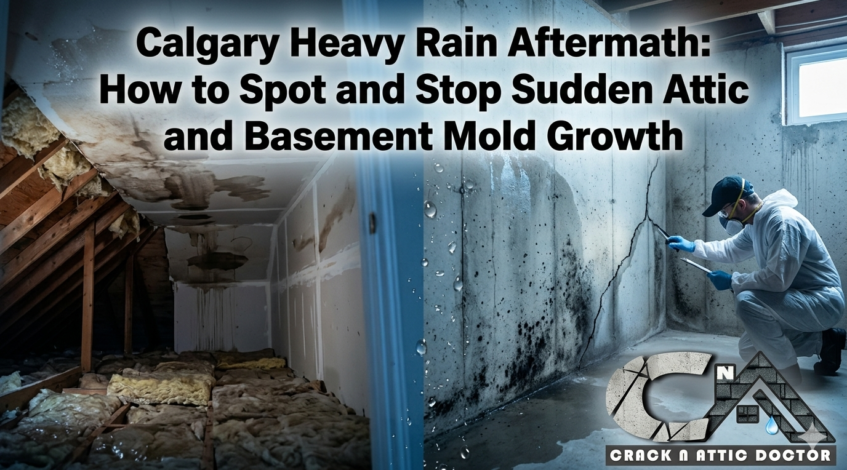
When a massive rainstorm rolls through Southern Alberta, your primary focus is usually keeping water out of your main living spaces. However, once the storm passes, a secondary and much more aggressive threat begins to develop behind your walls.
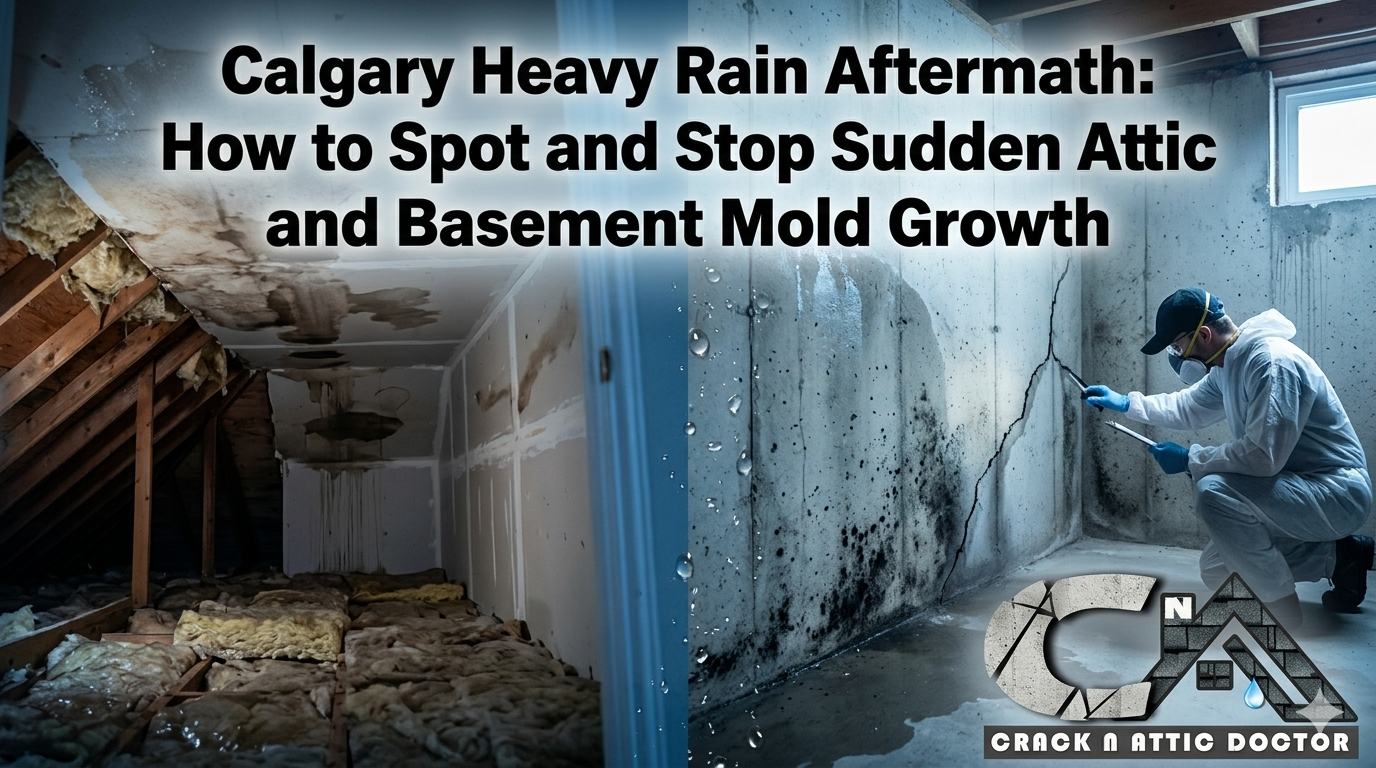
The aftermath of heavy rain is the primary catalyst for rapid indoor air quality issues. If moisture manages to breach your home’s envelope, a toxic clock starts ticking. To protect your family’s health and your property equity, you must act fast.
At Crack & Attic Doctor, we specialize in professional, certified mold remediation service solutions. Here is exactly how to spot the early warning signs of a moisture problem after a major storm and how to stop it before it takes over your home.
1. The 48-Hour Clock: Why Post-Rain Timing is Critical
Mold spores exist naturally in the air everywhere, both indoors and outdoors. Under normal conditions, they remain completely dormant and harmless. However, they only require three key ingredients to activate and colonize: an organic food source (like drywall, wood, or insulation), oxygen, and moisture.
-
Rapid Colonization: Once rainwater seeps into your structural elements, mold spores can germinate and begin growing in as little as 24 to 48 hours.
-
Hidden Expansion: Long before you ever see dark spots on your walls, the colony is actively expanding inside wall cavities, under subfloors, and deep within attic insulation.
-
The Cost of Delay: Waiting even a few days to address a minor post-rain leak can turn a simple drying job into a complex project requiring a professional mold remediation service.
2. How to Spot Hidden Post-Rain Growth in the Basement
Basements are naturally highly vulnerable to post-rain moisture issues due to hydrostatic pressure pushing groundwater against the foundation. After a storm, grab a high-powered flashlight and look for these telltale signs:
-
The Musty Odor: A distinct, earthy, or musty smell is often the very first indicator of growth. If your basement smells damp after a rainstorm, moisture is actively trapped somewhere.
-
Baseboard and Drywall Discoloration: Inspect the lower edges of your drywall. Look closely for subtle staining, yellow water lines, peeling paint, or bubbling wallpaper.
-
Efflorescence on Concrete: If you have exposed foundation walls, look for a white, powdery substance. This is efflorescence—mineral deposits left behind by migrating water, signaling an active path for moisture entry.
If you notice these signs, understanding why your home inspector found mold and what to do next to keep your closing on track can help you realize how critical it is to address these issues before they become permanent line items on a property inspection report.
3. How to Spot Sudden Attic Growth After a Storm
Most homeowners never think to check their attics after a heavy rainstorm. However, driving rain combined with strong Calgary winds can easily force water under shingles, through damaged roof valleys, or straight into faulty soffits.
-
Dark Staining on Sheathing: Go into your attic space and look at the underside of your roof plywood. Look specifically for dark streaks, black spotting, or a white, fuzzy glaze across the wood grain.
-
Matted or Damp Insulation: Rainwater leaking through the roof will pool directly into your insulation. If your fiberglass or cellulose insulation looks compressed, discolored, or feels damp to the touch, it is already compromised.
-
Rusted Roof Fasteners: Shiny roofing nails should never look rusty. If you see rust bleeding onto the surrounding wood, it proves that high humidity or active roof leaks are present.
To protect your home’s top half, seeking an expert mold treatment service in Okotoks or Calgary is vital to ensure attic microclimates are completely sterilized and safely managed.
4. How to Stop the Growth: The Multi-Step Remediation Process
Simply spraying retail bleach over visible growth is a temporary band-aid that actually makes the problem worse. Bleach contains mostly water; while it kills surface discoloration, the water soaks deep into porous wood and feeds the roots of the colony.
The only way to permanently fix the issue is through a professional, certified mold remediation service:
-
Source Elimination: First, we stop the water source. Whether it requires an expert crack repair service in Calgary to seal a leaking foundation wall or repairing attic ventilation, we kill the moisture supply.
-
Negative Pressure Containment: Next, we isolate the affected area using heavy-duty plastic shifting walls and commercial air scrubbers. This prevents airborne spores from cross-contaminating your clean living areas.
-
Physical HEPA Removal: We physically remove contaminated, non-structural materials (like wet drywall and ruined insulation) and deeply clean structural timbers using professional-grade antimicrobials and specialized HEPA vacuums.
-
Air Cleansing: We scrub the indoor air to ensure spore counts return to completely safe, natural background levels.
✅ Protect Your Home and Family from Post-Rain Hazards!
Do not let the aftermath of a Calgary downpour compromise your property value or your family’s physical well-being. If you suspect a leak has started a mold clock in your home, call the trusted experts immediately to secure your peace of mind.
📞 Contact Calgary’s Certified Remediation Experts
-
Main Office Line: (403) 633-6616 📱
-
Direct Tech Line: (587) 830-0840 📱
-
Official Website: www.cracknattic.ca 🌐
-
Email: crackandatticdoctor@gmail.com 📧
-
Office Address: #1, Second Floor – 32 Westwinds Crescent NE, Calgary, Alberta 📍
-
Proudly Serving: Calgary, Airdrie, Chestermere, Cochrane, Okotoks, High River, and surrounding Southern Alberta areas.
Leave a Reply