Most homeowners worry about roof damage from hail, heavy blizzards, or missing shingles. However, in Calgary, Airdrie, Cochrane, and Okotoks, the most destructive force attacking residential roofs rarely comes from the outside.
It starts from within your living room.
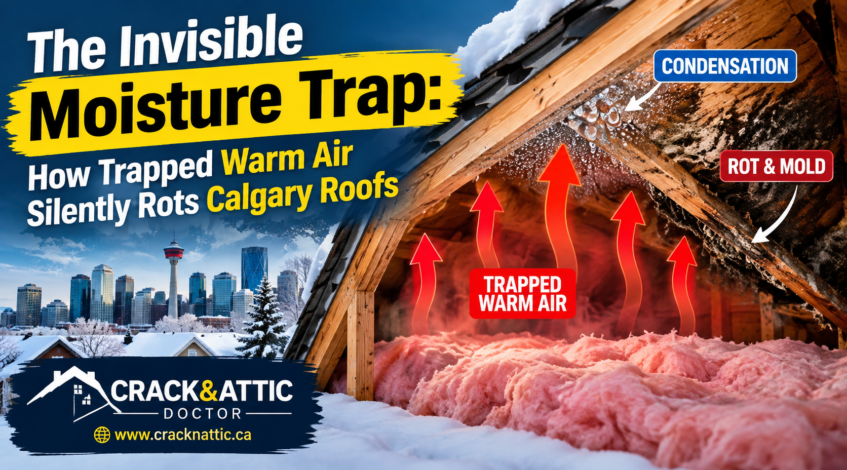
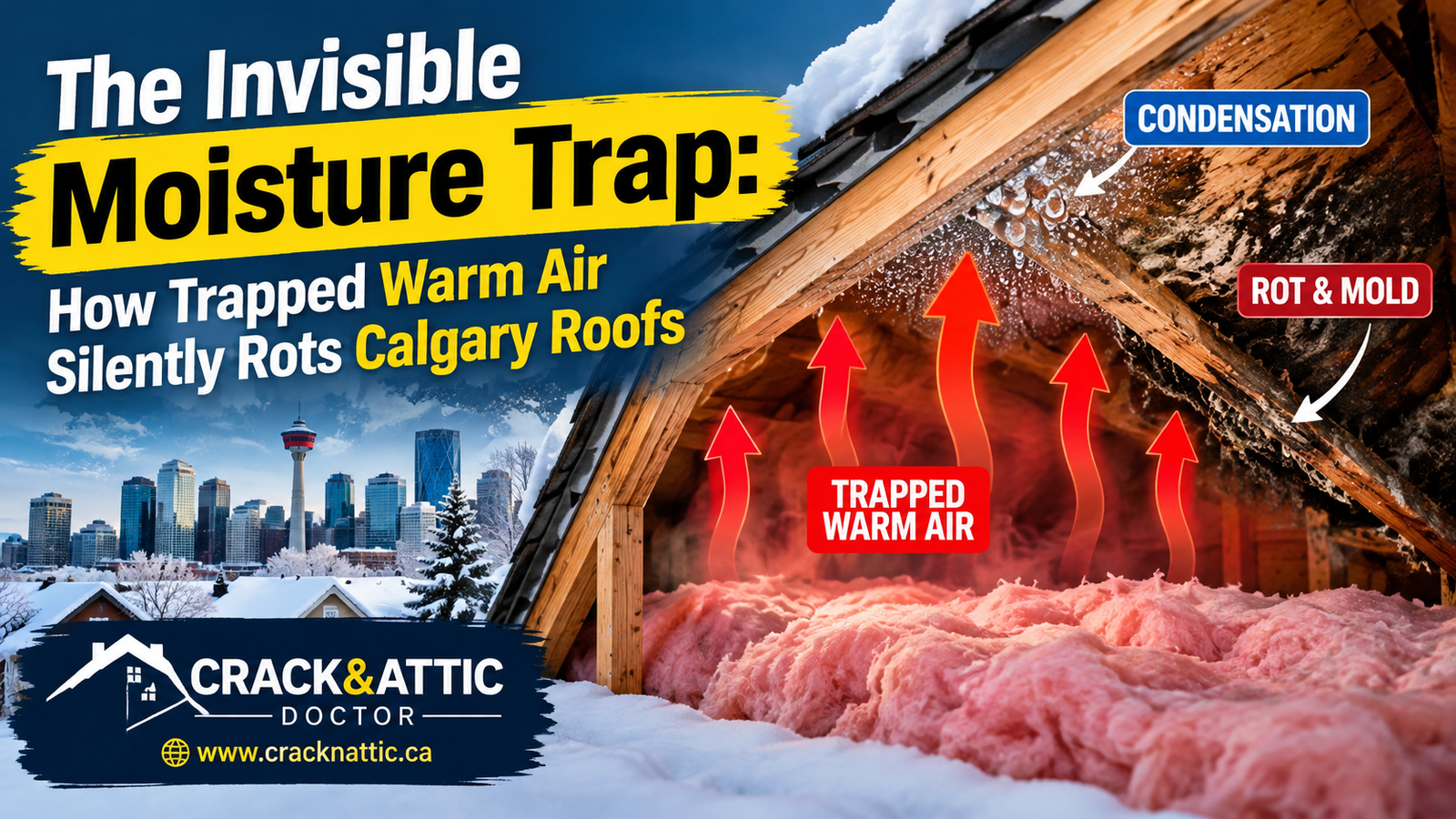
Every single day, warm indoor air carrying humidity rises straight up toward your ceiling. When this moist air enters an attic that lacks proper air sealing and balanced airflow, it gets sealed inside. The result is an invisible moisture trap—a quiet, destructive process that softens roof decking, rusts metal fasteners, and breeds toxic mold colonies long before you notice a single drip.
Catching this hidden moisture cycle early protects your home’s structural framing and prevents premature roof replacements. Here is how warm air becomes trapped, how it rots roof structures from the inside out, and how the Crack & Attic Doctor Solution delivers permanent protection.
1. The Stack Effect: How Warm Air Invades Your Attic
Your home functions like a chimney through a basic building science principle called the stack effect:
-
Daily Indoor Humidity Production: Everyday household routines—hot showers, cooking, laundry, dishwashers, and even normal breathing—release gallons of water vapor into your indoor air.
-
The Upward Pressure: Because warm air is lighter and less dense than cold air, it constantly rises toward the top of the house.
-
Thermal Bypass Penetrations: Warm air finds every unsealed penetration in your ceiling plane. It easily bypasses recessed pot lights, plumbing vent pipes, electrical junction boxes, bathroom exhaust fans, and attic access hatches.
-
The Trap: Once inside the roof cavity, that humid air cannot escape if the attic’s ventilation pathways are choked or imbalanced. It remains trapped against the roof structure.
2. The Rotting Process: How Trapped Air Destroys Your Roof Deck
Once warm moisture is trapped in an attic during Southern Alberta’s cold seasons, it triggers a destructive mechanical cycle:
A. The Winter Frost Accretion
In late autumn and throughout the sub-zero winter months, the exterior plywood or OSB roof sheathing stays below freezing. When trapped, warm vapor hits that freezing wood, it flash-freezes into thick rime frost. By mid-winter, your entire roof deck can be coated in inches of solid ice.
B. The Chinook Meltdown (“Attic Rain”)
When warm Chinook winds blow into Calgary, temperatures can climb by 20°C in just hours. That trapped frost melts all at once. Because the water has nowhere to go, it saturates loose-fill insulation and pours down onto the ceiling drywall below.
C. Structural Wood Delamination & Dry Rot
Wood framing is organic and hygroscopic; it absorbs standing water. Over repeated freeze-thaw cycles:
-
Plywood and OSB roof sheathing swell, delaminate, and soften into spongy mush.
-
Metal gusset plates and fasteners connecting engineered trusses corrode and rust.
-
Wood-decay fungi feed on the softened timbers, compromising the structural load-bearing capacity of the entire roof.
D. Rapid Toxic Mold Outbreaks
Mold spores require moisture, organic material, and temperatures above 4°C to colonize. Trapped attic moisture combined with escaping indoor warmth turns your roof space into a mold incubator within 24 to 48 hours. Through everyday air currents, those spores migrate downward into living areas.
3. Four Warning Signs Your Roof Has Trapped Moisture
Because the moisture trap operates out of sight, you must know what visual clues to look for:
-
Spongy Roof Decking: When walking on the roof, the sheathing feels soft, bouncy, or springy underfoot.
-
Rusted Roofing Nails: Exposed roofing nails that protrude through the sheathing inside the attic show heavy orange rust, black staining, or white oxidation rings.
-
Curling or Blistering Shingles: Excess heat and moisture trapped underneath the roof deck cook asphalt shingles from the bottom up, making them brittle and curled.
-
Dark Water Rings on the Sheathing: Black streaks or dark, ringed moisture patterns along the plywood joints indicate previous frost accumulations that melted.
4. The Crack & Attic Doctor Solution: Curing Trapped Attic Air
Simply installing an extra roof vent will not fix the issue if the root cause is ignored. The Crack & Attic Doctor Solution delivers an engineered, permanent building envelope cure:
-
Infrared Thermal Bypass Mapping: We use non-invasive infrared cameras to detect exactly where heated indoor air and humidity are leaking through the ceiling into the attic space.
-
Precision Penetration Air Sealing: We seal all ceiling bypasses—plumbing stacks, pot lights, electrical chases, and attic hatches—with expanding closed-cell foam, locking warm moisture inside your heated living space where it belongs.
-
Intake Baffle Installation & Soffit Clearing: We install rigid rafter baffles along every truss bay to clear choked soffits, establishing an unobstructed, continuous channel for cool outdoor air to sweep across the roof deck.
-
Certified HEPA Mold Remediation: If trapped condensation has already caused mold growth, we isolate the attic under negative air pressure, treat framing with hospital-grade antimicrobials, and scrub airborne spores with industrial HEPA filtration.
-
Alberta Code R-60 Insulation Upgrades: We extract waterlogged, clumped insulation and blow in fresh, high-performance insulation to full R-60 depth to restore thermal barriers and stop heat transfer.
-
Complete Envelope Waterproofing: From roof-level attic ventilation to below-grade foundation crack repair and exterior waterproofing and our comprehensive attic mold removal and insulation replacement services, we protect your entire home against structural moisture failure.
✅ Stop Hidden Roof Rot: Book Your Free Attic Moisture Audit!
Do not let trapped warm air quietly destroy your roof trusses and feed toxic mold colonies. Ensure your attic is breathing correctly, stop attic rain before winter sets in, and protect your home equity.
Contact our certified specialists today to schedule your free attic moisture and ventilation audit and clear quote!
📞 Contact Southern Alberta’s Building Envelope Specialists
-
Main Office Line: (403) 633-6616 📱
-
Direct Tech Line: (587) 830-0840 📱
-
Official Website: www.cracknattic.ca 🌐
-
Email: crackandatticdoctor@gmail.com 📧
-
Office Address: #1, Second Floor – 32 Westwinds Crescent NE, Calgary, Alberta 📍
-
Proudly Serving: Calgary, Airdrie, Chestermere, Cochrane, Okotoks, High River, and nearby Southern Alberta communities.
Leave a Reply