
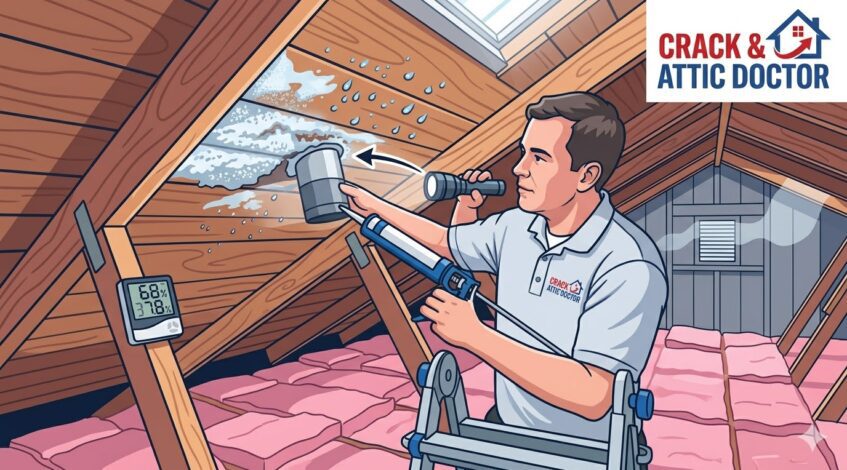
In the middle of a cold Calgary winter, the last thing you want to find is water dripping from your ceiling when it hasn’t even rained. This phenomenon, often called “attic rain,” is usually caused by one thing: condensation.
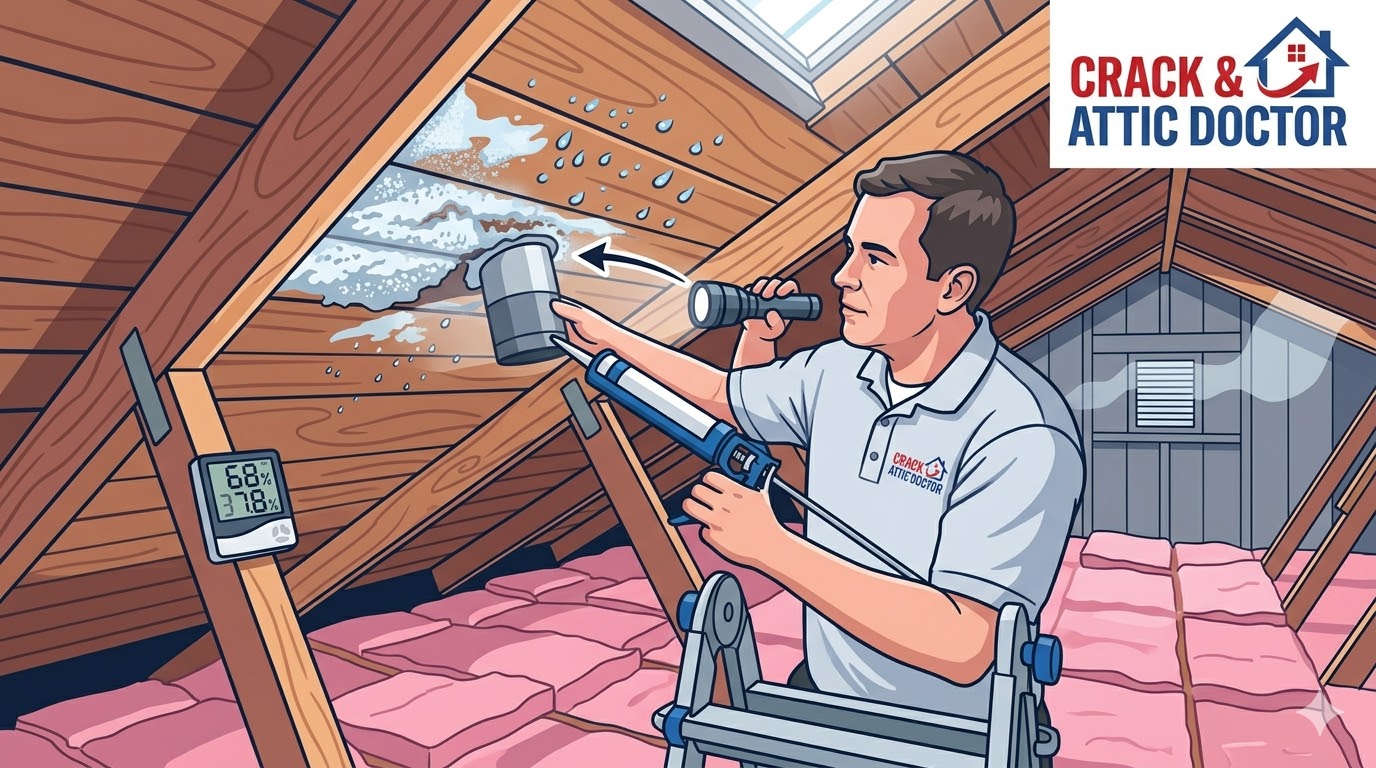
When warm, moist air from your living space escapes into the cold attic, it hits the underside of your roof deck and freezes into frost. When the temperature rises—like during one of our famous Chinooks—that frost melts all at once, leading to water damage, soaked insulation, and eventually, mold.
The secret to stopping this cycle isn’t just about better shingles; it’s about balancing your home’s humidity. Here is how you can manage your moisture levels to protect your attic.
1. Monitor Your Indoor Humidity Levels
Most modern homes are built to be airtight, which is great for energy bills but tough on air quality. During the winter, your indoor relative humidity should ideally stay between 25% and 40%.
If it climbs higher, that excess moisture will look for any way to escape—usually through your ceiling and into the attic. Invest in a simple hygrometer (available at most hardware stores) to keep an eye on these numbers.
2. Control Moisture at the Source
Daily activities add a surprising amount of water to your air. To keep levels balanced:
-
Use Exhaust Fans: Always run your bathroom fans during and for 20 minutes after showers. Ensure your kitchen hood fan is on while cooking.
-
Check Your Humidifier: If you have a whole-home humidifier attached to your furnace, turn it down as the outdoor temperature drops.
-
Limit Indoor Drying: Avoid hanging wet laundry to dry inside during the coldest months.
3. Seal the “Bypass” Points
Warm air doesn’t just drift through drywall; it rushes through “bypasses”—small gaps around light fixtures, attic hatches, plumbing stacks, and wiring.
By professionally sealing these leaks and ensuring your vapor barrier is intact, you prevent the “fuel” for condensation from ever reaching the attic.
4. Ensure Proper Ventilation
A balanced attic needs to breathe. Fresh, cold air should enter through your soffits (intake) and exit through roof vents (exhaust). If your soffits are blocked by old insulation, the moisture gets trapped.
-
Pro Tip: Ensure your bathroom exhaust fans are vented all the way outside, not just dumped into the attic space.
5. Upgrade Your Insulation
If your insulation is thin or uneven, heat from your home will warm the attic space, contributing to the freeze-thaw cycle. An “Attic Top-Up” ensures the attic stays at a consistent, cold temperature, which prevents frost from forming in the first place.
Is Your Attic Suffering from “Attic Rain”?
If you’ve noticed frost in your attic or mysterious ceiling leaks during a thaw, don’t wait for mold to take hold. At Crack & Attic Doctor, we specialize in diagnosing the root cause of attic moisture and providing permanent ventilation and insulation solutions.
Contact us today for a professional assessment:
-
Address: 715, 100, 4th Av SW, Calgary, Alberta
-
Phone: (403) 321-2623
-
Email: crackandatticdoctor@gmail.com
-
Website: www.cracknattic.ca
-
Service Areas: Calgary, Cochrane, Airdrie, Chestermere, Conrich, Okotoks, and High River.
Leave a Reply