
Winter in Canada brings freezing temperatures, snow‑covered roofs, and cozy indoor living. But while homeowners seal up their houses to stay warm, another silent problem often begins to grow — mold.
At Crack N Attic Insulation, we receive a surge of calls every winter from homeowners who are shocked to discover mold in their attics, basements, and walls. Many people assume mold is a summer‑only issue. In reality, winter often creates the perfect conditions for mold growth inside Canadian homes.
Understanding why this happens can help you protect your home, your health, and your investment.
Why Mold Is a Winter Problem in Canada
Mold needs only three things to grow: moisture, a food source, and moderate temperatures. Your home already provides plenty of food for mold in the form of wood, drywall, dust, and insulation backing. During winter, moisture and temperature conditions quietly fall into place as well.
When your furnace runs, it warms the indoor air. Everyday activities like cooking, showering, laundry, breathing, and even running a humidifier add moisture to that air. Warm air naturally rises and moves upward through a house, a process known as the stack effect.
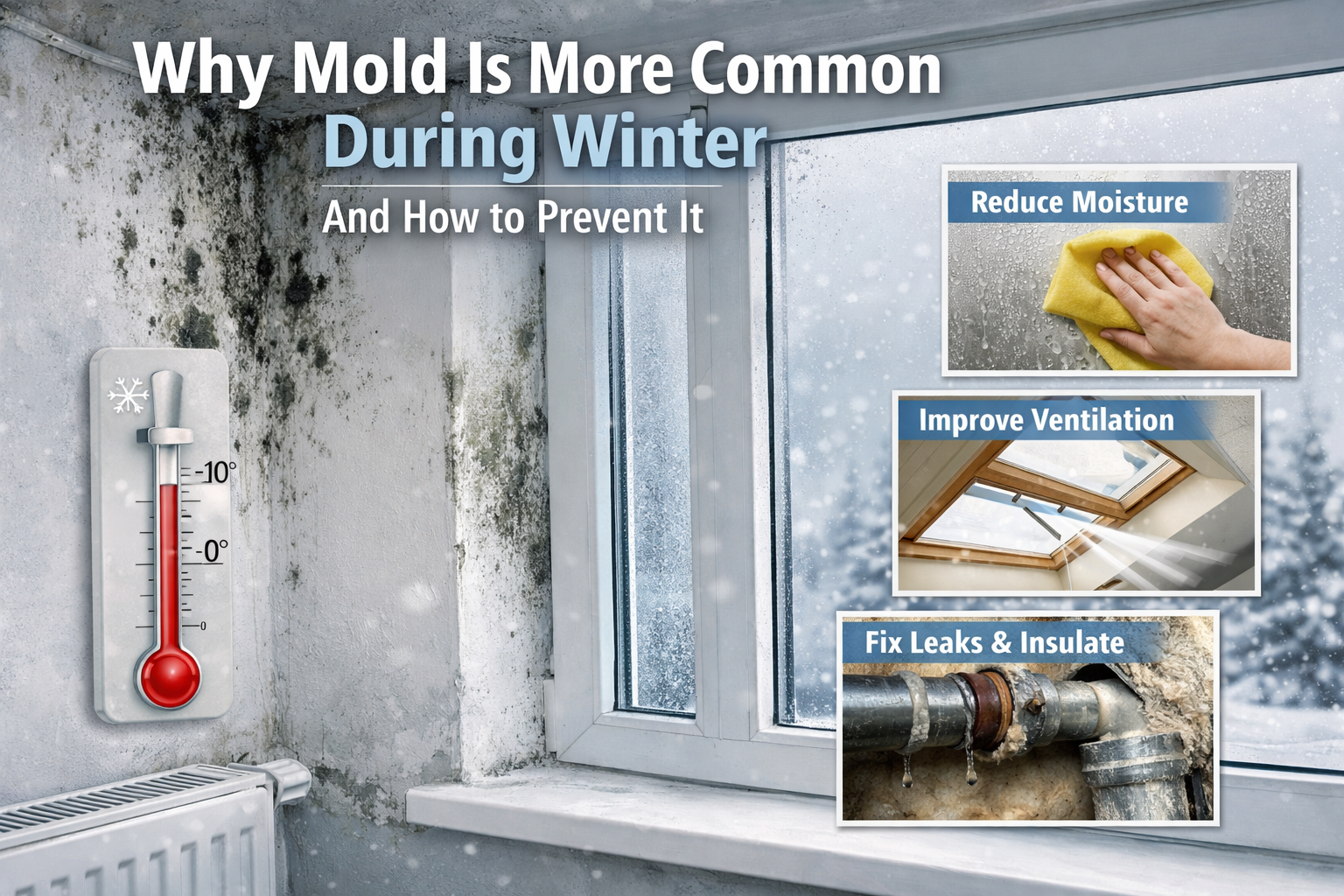
As this warm, moisture‑laden air travels upward, it eventually meets cold surfaces such as attic roof sheathing, exterior walls, window frames, and basement foundation walls. When warm air touches these cold surfaces, it cools rapidly and releases its moisture in the form of condensation or frost.
Over time, that moisture soaks into wood framing, dampens insulation, and settles behind drywall. If these materials remain damp for more than a day or two, dormant mold spores activate and begin to grow.
The Role of Poor Insulation and Air Leaks
Many Canadian homes have uneven or insufficient attic insulation. Others have hidden air leaks around attic hatches, pot lights, bathroom fan housings, chimneys, and plumbing or wiring penetrations.
These small openings allow warm, humid indoor air to escape into the cold attic. Once inside, the moisture freezes onto roof decking during very cold nights. When temperatures rise slightly, it melts and drips back into the insulation and wood framing below.
This repeating freeze–thaw cycle continues all winter long, creating constant moisture conditions that are ideal for mold growth. Homeowners rarely notice anything wrong until stains appear on ceilings or a musty odor develops.
Reduced Ventilation Traps Moisture Indoors
During winter, windows stay closed and fresh airflow is greatly reduced. Exhaust fans are often used less frequently, and many homes are tightly sealed for energy efficiency.
While this helps lower heating bills, it also traps humid air inside. With nowhere to escape, that moisture slowly migrates into wall cavities and attic spaces. Over time, hidden condensation forms in places you never see — behind drywall, inside insulation, and on roof sheathing.
Ice Dams and Roof Leaks Add More Moisture
Ice dams are another major winter mold trigger. They form when heat escapes into the attic and melts snow on the roof. The melted snow runs down toward the eaves, refreezes, and creates a dam that traps water behind it.
That trapped water can seep under shingles and enter your attic, soaking roof sheathing, rafters, and insulation. Wet wood and insulation quickly become a breeding ground for mold if the moisture is not removed.
Indoor Humidity Levels Are Often Too High
Many homeowners unknowingly keep indoor humidity too high during winter. While some humidity is necessary for comfort, excess humidity increases window condensation, wall moisture, and attic frost buildup.
In most Canadian climates, indoor humidity should stay roughly between 30 and 40 percent in winter. When humidity levels climb higher than that, the risk of condensation and mold growth rises sharply.
Where Mold Commonly Appears in Winter
Because warm air rises, the attic is the most common place for winter mold to form. However, mold is also frequently found in basements, crawl spaces, exterior wall cavities, behind drywall, and around windows and doors.
By the time visible mold appears, moisture problems have usually been present for months.
Early Warning Signs You Shouldn’t Ignore
Some of the earliest clues of a winter mold problem include persistent musty odors, dark staining on ceilings or walls, frost or water droplets in the attic, peeling paint, bubbling drywall, and excessive condensation on windows.
Health symptoms can also be a warning sign. Chronic coughing, sinus congestion, headaches, irritated eyes, and worsening asthma are commonly linked to hidden mold growth.
How to Prevent Mold During Winter
Preventing winter mold starts with controlling heat loss and moisture movement.
Proper attic insulation keeps warm air inside your living space and reduces condensation in the attic. Air sealing closes the hidden gaps that allow moist indoor air to leak upward into cold spaces. Together, these two upgrades dramatically reduce the risk of attic mold.
Installing a vapor barrier adds another layer of protection by slowing the movement of moisture into insulation and framing. This is especially important in older homes that were built before modern moisture‑control standards.
Balanced attic ventilation also plays a critical role. It helps remove excess moisture, stabilizes attic temperatures, and reduces ice dam formation.
Inside the home, controlling indoor humidity is essential. Using bathroom and kitchen exhaust fans regularly, avoiding drying laundry indoors, and monitoring humidity levels with a hygrometer can make a significant difference.
Finally, any roof leaks or ice dam issues should be repaired promptly before moisture has time to cause damage.
Why Choose Crack N Attic Insulation?
Homeowners across Canada trust Crack N Attic Insulation because we focus on long‑term solutions, not temporary fixes.
We specialize in attic insulation upgrades, professional air sealing, vapor barrier installation, and attic ventilation improvements. Our team uses high‑quality, energy‑efficient materials and provides honest inspections backed by building‑science expertise.
In addition to helping prevent mold, our services also improve indoor air quality and reduce heating costs.
Mold doesn’t hibernate in winter. It thrives when warm indoor air meets cold surfaces and moisture becomes trapped inside your home.
With proper insulation, air sealing, ventilation, and humidity control, you can protect your home’s structure, safeguard your family’s health, and prevent costly mold damage.
Book a Free Attic Inspection Today
If you suspect moisture, mold, or insulation problems this winter, Crack N Attic Insulation is here to help.
Visit www.cracknattic.ca to book your free attic inspection today.
Leave a Reply