In Alberta, we don’t just have winters; we have battles with the elements. 🏔️ While most homeowners focus on their furnace, the real hero of a dry home is often hiding right above your head. As we navigate the extreme temperature swings of 2026, the Attic Top-Up has become the ultimate “prescription” for preventing the dreaded winter condensation cycle. 🏠✨
🌡️ The Science: Why “Thin” Insulation Leads to “Attic Rain”
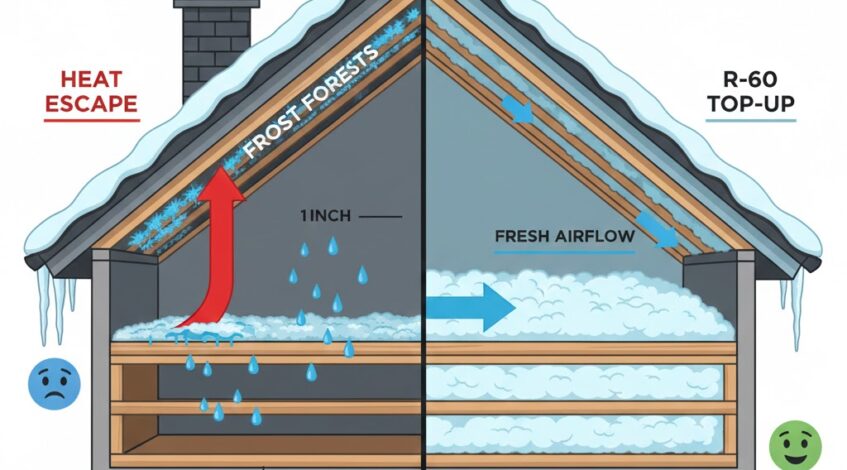
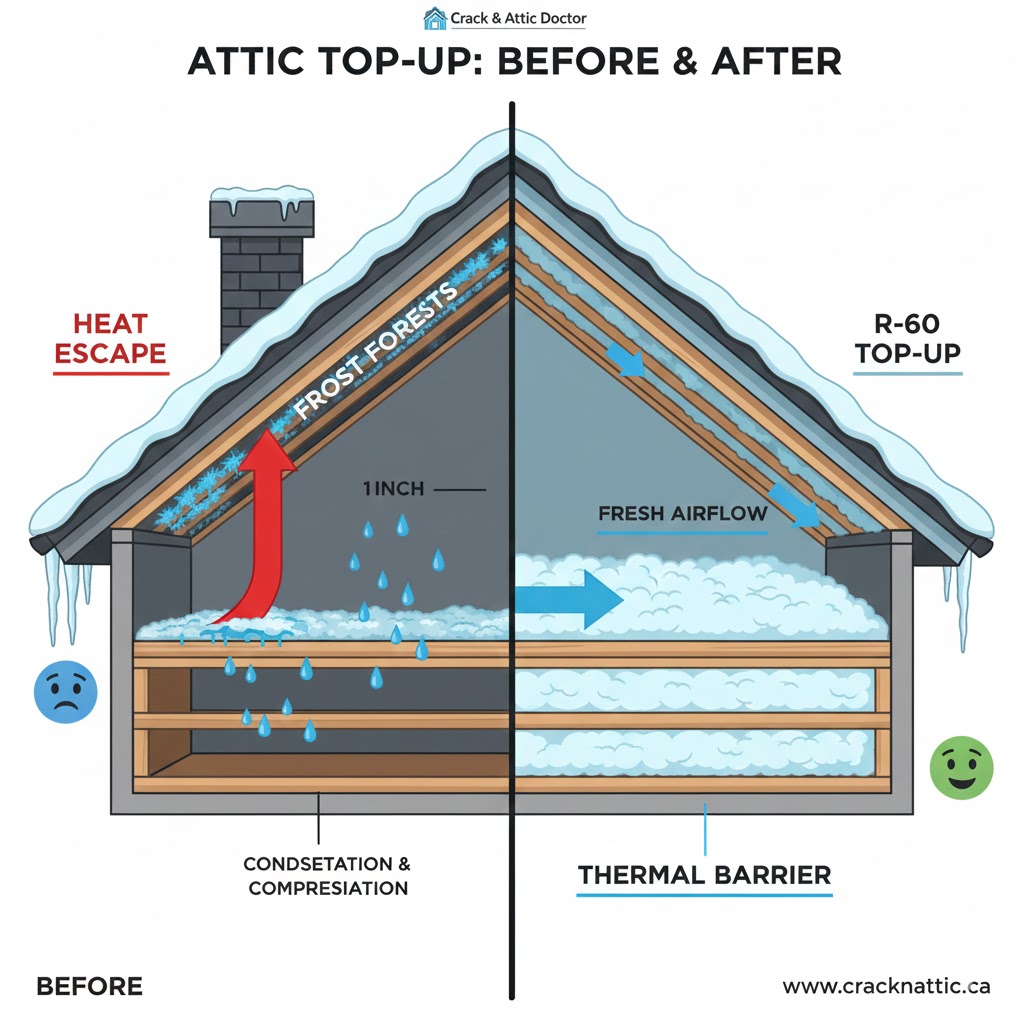
Condensation isn’t just a window problem; it’s an attic’s worst nightmare. 😱 When your insulation is too thin—often seen in older homes with only 8 to 10 inches of material—it fails to create a thermal barrier.
Because heat naturally rises, it escapes through your ceiling and warms the attic air. 📈 When that warm, moist air hits your freezing roof deck, it turns instantly into frost. During the next chinook or sunny day, that frost melts, creating “Attic Rain” that soaks your drywall and ruins your insulation. 🌧️🛑
🛡️ How a Top-Up Breaks the Cycle
An Attic Top-Up involves adding a fresh layer of blown-in insulation (usually cellulose or fiberglass) to reach the modern standard of R-60 (about 16–20 inches). 📏 Here is how it protects you:
-
Thermal Decoupling: 🧊 It keeps the heat in your living space and the cold in your attic. This prevents the roof deck from warming up, stopping frost before it starts.
-
Vapor Pressure Control: 🌬️ By keeping the attic temperature consistent with the outdoors, you prevent the “dew point” from reaching your structural wood.
-
Ice Dam Defense: 🧱 It stops the melt-and-freeze cycle at your eaves, protecting your gutters and shingles from expensive ice damage.
💡 The 2026 Standard: The National Building Code (Alberta Edition) now recommends R-60 for attics. If you can see your floor joists, you are likely at R-30 or less—meaning you’re losing money and risking moisture damage every day. 💸
🚩 3 Signs Your Home is Begging for a Top-Up
-
The “Crunch Test”: ❄️ If you step into your attic and the top layer of insulation feels frozen or “crunchy,” you have active condensation issues.
-
Snow-Free Zones: 🔍 Look at your roof after a light snowfall. If you see bare patches while your neighbors still have snow, your heat is “leaking” out and melting it.
-
The Icicle Warning: 🧊 Large icicles aren’t just pretty; they are a red flag that heat is escaping your attic and causing a dangerous melt-refreeze cycle.
👨⚕️ The Crack & Attic Doctor Difference
We don’t just “dump more fluff.” Our 2026 Top-Up protocol ensures your home’s long-term health:
-
Seal First, Top Later: 🛠️ We identify and seal “attic bypasses” (air leaks) before adding insulation. Adding insulation over a leak is like putting a blanket over a blowtorch!
-
Baffle Installation: 🌬️ We ensure your soffit vents remain clear so your attic can breathe.
-
High-Performance Materials: 💎 We use mold-resistant, fire-rated materials designed for the Alberta climate.
📞 Schedule Your Winter Wellness Check
Don’t wait for the “rain” to fall inside your home. 🚫 Reach out to the experts at Cracknattic today.
-
Phone: 📱 (403)-321-2623
-
Email: 📧 crackandatticdoctor@gmail.com
-
Website: 🌐 www.cracknattic.ca
📍 Head Office: 715, 100, 4th Av SW, Calgary, Alberta
📍 Branch Office: #1, Second Floor – 32 Westwinds Crescent, NE, Calgary, Alberta
🌍 Proudly Serving: Calgary, Cochrane, Airdrie, Chestermere, Conrich, Okotoks, and High River.
Leave a Reply