
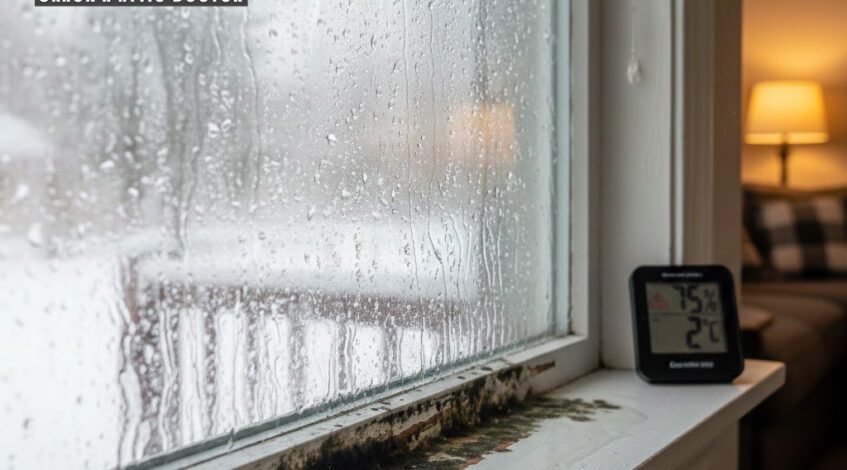
Calgary’s winter is defined by its dramatic temperature swings—from brutal deep freezes to sudden Chinooks. This challenging climate creates the perfect storm for a common, frustrating, and potentially damaging household issue: window condensation leading to mold growth. That persistent fog, the ice build-up, and the dark, fuzzy patches on your window sills are signals that your home’s humidity and insulation are out of sync.
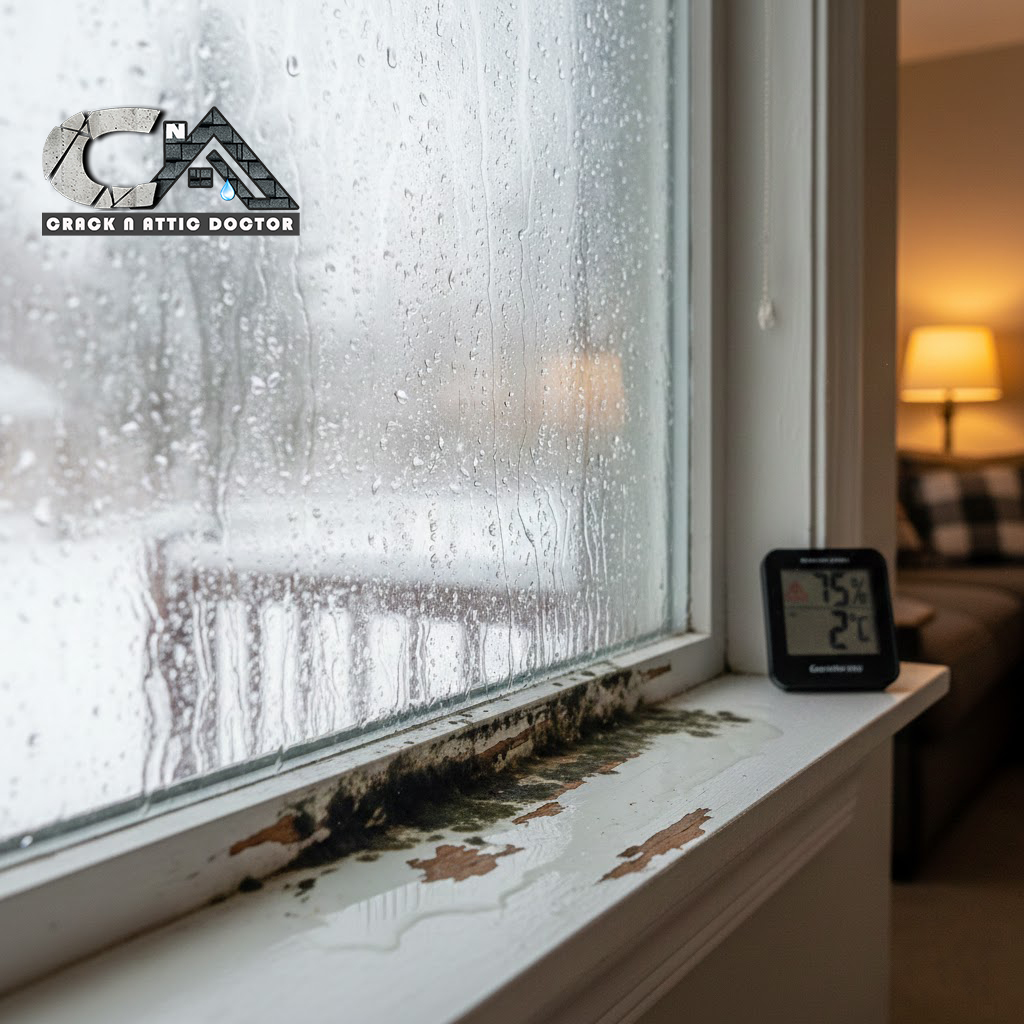
Ignoring this “sweating glass” is more than just an aesthetic problem; it can lead to rotted window frames, damaged drywall, and poor indoor air quality. Fortunately, understanding the science behind the crisis and taking proactive steps can save you time, money, and the headache of major repairs.
The Calgary Condensation Equation
Condensation is simply warm, moisture-laden indoor air meeting a cold surface—the glass pane. When the temperature of the glass drops below the dew point of the air inside, the excess water vapour converts back into liquid water.
In a Calgary winter, outdoor temperatures can plunge well below freezing, rapidly cooling the window glass. Meanwhile, everyday activities like showering, cooking, and even breathing add moisture to the warm indoor air.
If this condensation isn’t addressed, the constant moisture on the window frame and sill creates an ideal environment for mold and mildew to flourish.
🛡️ Prevention: 3 Steps to Dry, Mold-Free Windows
The key to preventing mold is to break the condensation equation by reducing indoor humidity and warming the glass surface.
1. Master Your Humidity (The Crucial Number)
The most effective strategy is controlling the relative humidity (RH) inside your home. In Calgary’s climate, a high RH can turn into condensation fast. Use a hygrometer to monitor your humidity and adjust your settings accordingly:
-
Extreme Cold (-20°C and lower): Target a maximum RH of 15% to 20%.
-
Cold (-10°C to -19°C): Target a maximum RH of 20% to 25%.
-
Mild (Above -10°C): Target a maximum RH of 25% to 35%.
Quick Fixes:
-
Turn down or turn off your whole-house humidifier during severe cold snaps.
-
Run kitchen and bathroom exhaust fans during and for 15-30 minutes after showering or cooking. Ensure the fans vent outside, not into the attic.
-
Use a dehumidifier in problem areas like the basement or laundry room.
2. Increase Airflow
Stagnant, moist air is the enemy. You need warm, dry air to reach the cold glass.
-
Open Blinds and Curtains: Keep drapes, blinds, and shutters open a few inches, especially at the bottom, to allow heat from your registers to circulate around the window.
-
Run the Furnace Fan: Switch your furnace fan to “ON” instead of “AUTO” to continuously circulate air and even out temperatures throughout the house.
-
Ventilate Briefly: Even in winter, open a window briefly (5-10 minutes) on opposite sides of the house to exchange moisture-laden air with drier outdoor air.
3. Inspect and Improve Insulation
If you have constant condensation despite managing humidity, you may have an insulation or air-sealing problem.
-
Check Seals: Inspect window seals, caulking, and weatherstripping. Air leaks allow cold air to rush in, dropping the glass temperature dramatically.
-
Insulation Gaps: In older homes, cold air might be penetrating the wall around the window frame due to poor insulation.
🔨 Repair: Clearing Condensation Damage and Killing Mold
Once mold has appeared on your window sill, frame, or surrounding drywall, immediate action is required to prevent its spread.
-
Safety First: Wear gloves, eye protection, and a mask to avoid inhaling mold spores.
-
Clean & Disinfect: For mold on non-porous surfaces like glass or vinyl frames, use a mixture of white vinegar and water, or a commercial mold removal product. Avoid using bleach on porous materials like wood or drywall, as it may not kill the mold spores below the surface and can damage the material.
-
Dry Completely: After cleaning, use a fan or hair dryer to ensure the area is completely dry. Mold cannot grow without moisture.
-
Seal and Repair: If the mold has penetrated porous materials like the wood sill or drywall, they may need to be replaced. For persistent problems, or mold in hard-to-reach areas like the attic, professional remediation is essential.
If you suspect your condensation issue stems from a deeper structural problem—like poor attic ventilation, which can lead to “attic rain” (frozen condensation melting and leaking into your home)—it’s time to call in the specialists.
📞 Need Professional Help? Contact the Experts
If your condensation crisis is overwhelming your DIY efforts, or if you’ve spotted mold in your attic or other hidden spaces, the team at Crack & Attic Doctor can provide professional inspection and remediation. They specialize in identifying and fixing moisture issues that lead to mold and structural damage.
| Company | Contact Details | Service Area |
| Crack & Attic Doctor | Phone: (403) 321-2623 | Calgary and Area |
| Website: www.cracknattic.ca | Service: Mold Treatment Service, Attic Repair |
Leave a Reply