

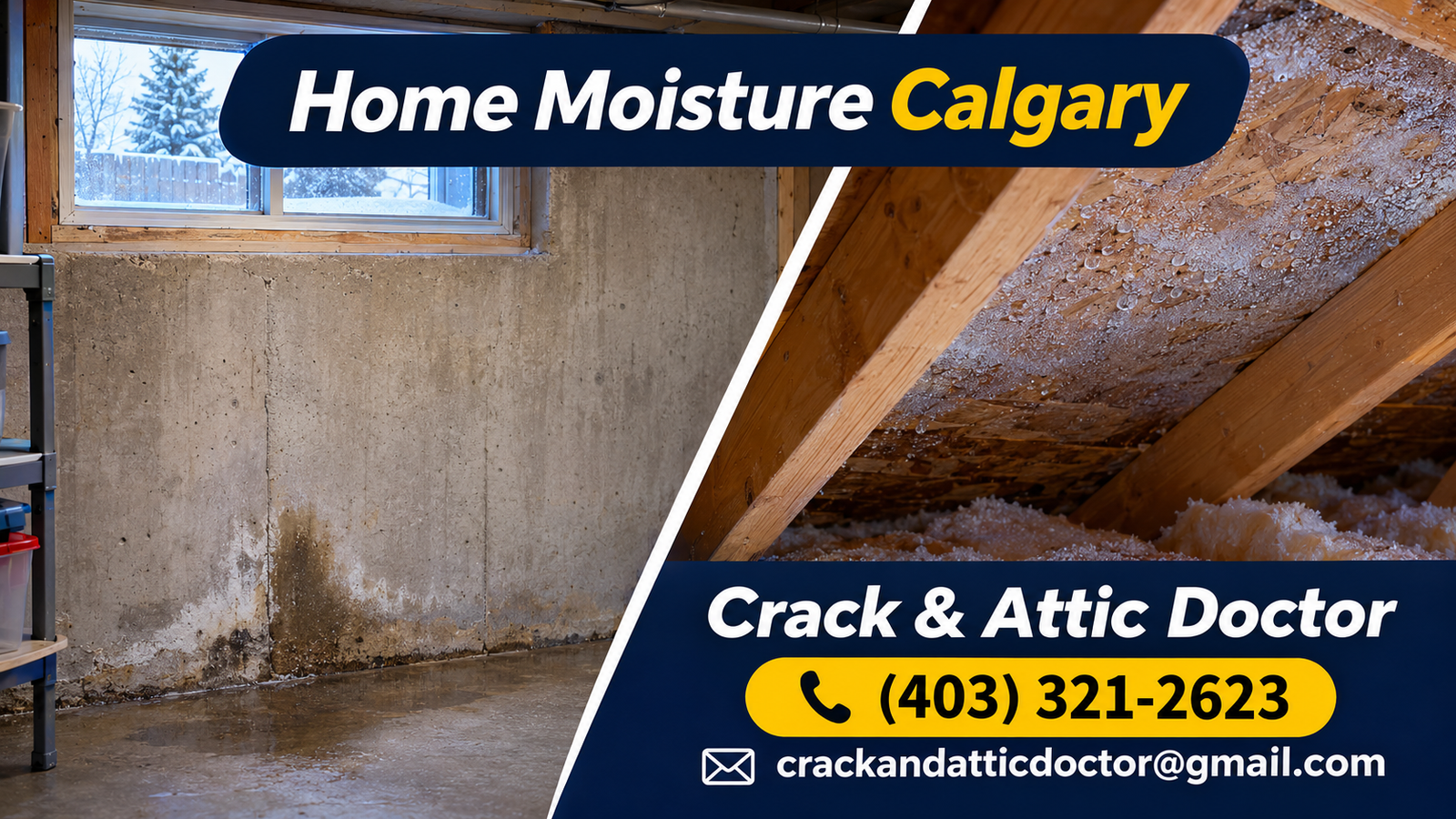
Winter can expose moisture problems that stay hidden during warmer months.
A small damp spot may seem harmless. A little window condensation may look normal. A faint musty smell may seem easy to ignore.
However, moisture can travel through a home in many ways.
In Calgary, cold weather, snow, freeze-thaw cycles, and warm indoor air can all affect the building envelope. Moisture may enter from outside, form through condensation, or move through small gaps in the home.
Knowing where to look can help you find problems early.
Here are seven hidden sources of home moisture in Calgary that homeowners should understand.
1. Foundation Cracks
A foundation crack can allow water to enter a basement.
The crack may look small at first. Water can still find its way through it when the soil around the foundation becomes wet.
Calgary homes also face changing ground conditions during freezing and thawing weather.
Watch for:
- Damp areas on basement walls
- Water marks
- Peeling paint
- White mineral deposits
- Wet floors near foundation walls
- Musty basement smells
A crack that stays dry today may leak during a heavy rain or rapid thaw.
Do not judge a foundation crack only by its size.
The location, direction, movement, and moisture around the crack also matter.
2. Poor Exterior Drainage
Water needs a clear path away from your home.
If the ground slopes toward the foundation, rain and melting snow can collect near the basement walls.
Downspouts can also create problems when they release roof water too close to the house.
Take a walk around your home and check:
- Soil grading
- Downspout discharge points
- Window wells
- Low spots in the yard
- Areas where water collects
- Soil that has settled near the foundation
The City of Calgary recommends checking for water pooling near foundation walls and other signs of moisture around the home.
Good drainage can reduce the amount of water that reaches the foundation.
3. Attic Condensation
Moisture does not always enter your home from outside.
It can also come from inside.
Showers, cooking, laundry, and normal daily activity add moisture to indoor air. Warm air can rise through gaps in the ceiling and reach a cold attic.
When warm, moist air meets a cold surface, condensation can form.
During very cold weather, that moisture may appear as frost.
A later warm spell can melt the frost and create water in the attic.
Look for:
- Frost on roof sheathing
- Wet insulation
- Dark wood
- Rusted fasteners
- Water stains
- Musty smells
The Government of Canada recommends checking attics during or after a cold snap for heavy frost and checking insulation for wet or damaged areas.
4. Blocked Soffit Vents
Your attic needs airflow.
Soffit vents help bring outside air into the roof space. If insulation blocks these vents, airflow can become restricted.
Poor airflow can allow moisture to stay in the attic.
That moisture may then condense on cold roof surfaces.
A homeowner may not notice the problem from inside the living area.
That is why attic inspections matter.
A professional can check whether insulation is blocking the eaves and whether the attic has a clear ventilation path.
5. Bathroom and Kitchen Exhaust Problems
Exhaust fans are designed to move moist air outside.
Problems can occur when a duct is loose, damaged, poorly routed, or not properly insulated.
Moist air can then enter areas where it should not.
In an attic, this can add moisture to insulation and roof sheathing.
Check for warning signs such as:
- Condensation around the fan
- A damp bathroom ceiling
- Musty smells
- Wet insulation
- Water marks near ceiling openings
- Poor airflow from the fan
The Government of Canada identifies bathroom and kitchen vents among areas where indoor moisture can enter an attic through air leakage.
6. Wet or Damaged Insulation
Insulation should stay dry.
When insulation becomes wet, its performance can suffer.
Moist insulation may also point to a larger problem.
The source could be:
- A roof leak
- Attic condensation
- A plumbing leak
- Air leakage
- Poor ventilation
- Snow or ice-related water entry
Do not simply cover wet insulation with more insulation.
Find the source first.
The Government of Canada advises homeowners to identify the moisture source and allow wet insulation to dry before covering it. Damaged or mold-contaminated insulation may need removal.
7. Basement Humidity and Condensation
A basement can feel damp even when there is no active leak.
Cold walls and floors can collect condensation when indoor humidity is high.
Furniture placed tightly against exterior walls can also reduce airflow.
Over time, repeated moisture can contribute to staining, odors, and mold growth.
Check areas such as:
- Basement corners
- Behind furniture
- Around windows
- Near pipes
- Along exterior walls
- Around floor drains
If moisture keeps returning, do not assume that a dehumidifier alone will solve the problem.
The source of the moisture should be identified.
How Can You Tell Where Moisture Is Coming From?
Moisture can have several causes.
A stain on a basement wall does not automatically mean a foundation crack is leaking.
Likewise, water in an attic does not always mean the roof has a hole.
The timing can provide useful clues.
Ask yourself:
Does it happen after rain?
The problem may involve exterior drainage, a foundation issue, a window, or the roof.
Does it happen during very cold weather?
Condensation or attic moisture may be involved.
Does it appear after a warm Chinook?
Melting frost or snow can expose an attic or foundation moisture problem.
Does it happen after showers or cooking?
Indoor humidity or an exhaust problem may need attention.
Finding the source is more important than simply cleaning the visible water.
Why Calgary Homes Need Extra Attention in Winter
Calgary weather can change quickly.
A long cold period can be followed by a sudden warm spell. Snow and ice can melt while the ground remains frozen.
These changes can put extra stress on drainage systems and building materials.
Inside the home, the opposite conditions can occur.
Warm indoor air meets cold exterior surfaces.
That creates opportunities for condensation.
The City of Calgary recommends checking roofs and attics for ice damming, water leaks, heavy snow loads, and other winter warning signs.
What Should You Check This Winter?
A simple moisture check can start with a walk around the home.
Outside
Look at:
- Foundation walls
- Downspouts
- Soil grading
- Window wells
- Roof drainage
- Areas where snow collects
Basement
Look for:
- Damp walls
- Water stains
- Cracks
- Musty smells
- Condensation
- Wet flooring
- White mineral deposits
Attic
Look for:
- Frost
- Wet insulation
- Dark roof sheathing
- Mold
- Rusted nails
- Blocked soffit vents
- Signs of water entry
The goal is not to diagnose the entire problem yourself.
The goal is to notice early warning signs.
When Should You Call a Professional?
Professional help makes sense when the source of moisture is unclear or the problem keeps returning.
Consider an assessment if you notice:
- Repeated basement leaks
- Foundation cracks with moisture
- Wet insulation
- Attic frost
- Mold growth
- Persistent musty odors
- Water stains
- Recurring condensation
- Poor attic ventilation
- Drainage problems near the foundation
A moisture problem often has a cause that is hidden behind the visible symptom.
For example, cleaning a water stain does not stop the leak.
Painting over mold does not remove the moisture source.
Adding insulation does not fix blocked attic airflow.
The right repair starts with finding the cause.
How Crack & Attic Doctor Can Help
Crack & Attic Doctor focuses on moisture and building-envelope problems from the foundation to the attic.
The company provides services related to:
- Foundation cracks
- Basement moisture
- Attic moisture
- Attic insulation
- Attic ventilation
- Mold remediation
- Building-envelope problems
Recent Crack & Attic Doctor content also highlights the connection between foundation moisture, attic airflow, insulation, and winter conditions.
This whole-home approach can be useful when moisture problems involve more than one area.
Final Thoughts
Moisture problems rarely become serious overnight.
Small signs can appear first.
A damp basement corner may come before a leak. Frost in an attic may come before a ceiling stain. Poor drainage may become obvious only after snow melts.
Pay attention to those early signs.
For home moisture in Calgary, the most useful first step is to find the source.
If you notice recurring moisture, foundation cracks, attic frost, wet insulation, mold, or water stains, a professional assessment can help identify the problem before it becomes more costly.
Contact Crack & Attic Doctor
Phone: (403) 321-2623
Email: crackandatticdoctor@gmail.com
Website: www.cracknattic.ca
Head Office: 715, 100, 4th Av SW, Calgary, Alberta
Branch Office: Second Floor – 32 Westwinds Crescent NE, Calgary, Alberta
Service Areas: Calgary, Cochrane, Airdrie, Chestermere, Conrich, Okotoks, High River
FAQ
What causes moisture problems in Calgary homes?
Common causes include foundation seepage, poor drainage, attic condensation, blocked ventilation, exhaust problems, wet insulation, and high indoor humidity.
How do I know if moisture is coming through my foundation?
Look for damp walls, water stains, white mineral deposits, recurring leaks, or moisture that appears after rain or snowmelt. A professional assessment may be needed to confirm the source.
Why does my Calgary attic get frost?
Warm indoor air can move into a cold attic through gaps in the ceiling. When that moist air reaches cold roof surfaces, it can freeze and form frost.
Can wet insulation cause problems?
Yes. Wet insulation may lose performance and can indicate a roof leak, condensation problem, or another moisture source.
Should I worry about a musty basement smell?
A persistent musty smell can indicate moisture or mold. If the smell keeps returning, finding the moisture source is important.
When should I get a home moisture inspection?
Consider an inspection when moisture keeps returning, you see foundation cracks, attic frost, wet insulation, mold, water stains, or unexplained damp areas.
Seeing moisture, mold, attic frost, or foundation concerns?
Contact Crack & Attic Doctor for a professional assessment.
(403) 321-2623
crackandatticdoctor@gmail.com