Most homeowners assume an attic leak announces itself with an obvious drip through the ceiling drywall. In Southern Alberta, waiting for water to stain your living room paint guarantees you are already months too late.
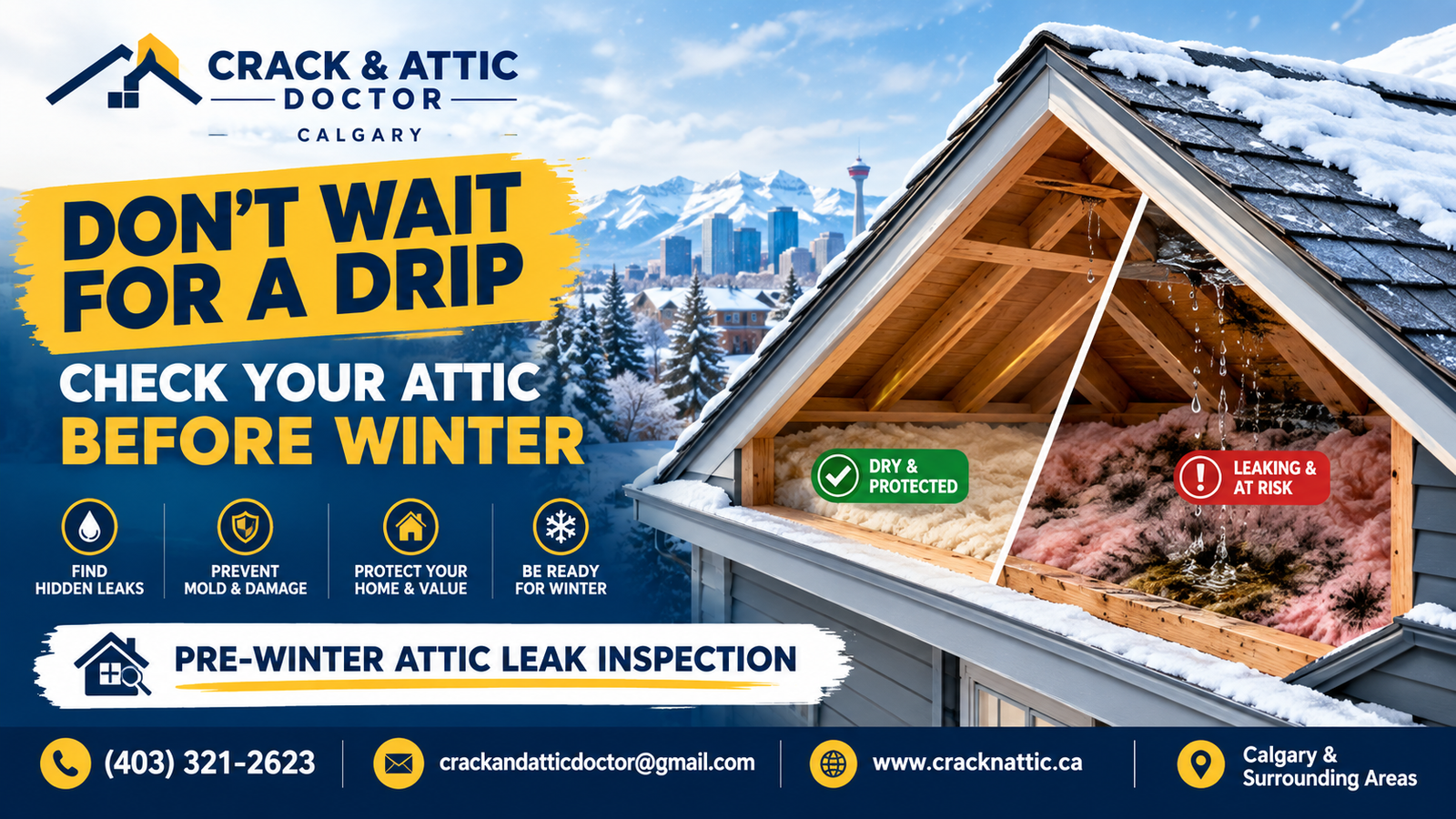
Calgary, Airdrie, Cochrane, and Okotoks experience severe winter weather that exploits every building envelope weakness. Sub-zero cold snaps, heavy blizzards, and swift Chinook thaws turn tiny roof breaches and trapped moisture into massive structural hazards.
By the time water drips onto your top floor, wood trusses have softened, blown-in insulation has collapsed, and toxic mold colonies have spread.
Checking your roof cavity in early autumn prevents expensive mid-winter emergencies. Here is how hidden attic leaks develop, why winter makes them exponentially worse, and how the Crack & Attic Doctor Solution secures your home before the snow flies.
1. The Two Types of Winter Attic Leaks
Winter water damage inside an attic rarely comes from simple rainwater. In Southern Alberta, attic leaks split into two distinct mechanical categories:
A. The Winter Meltdown (“Attic Rain”)
Attic rain is an internal moisture failure rather than an exterior roof breach. Everyday living—showering, cooking, running laundry, and breathing—fills your home with warm, moist air.
-
Due to the stack effect, this humid air rises into the attic through unsealed ceiling penetrations around pot lights, plumbing vents, and the attic access hatch.
-
In December and January, sub-zero outdoor temperatures keep the underside of your plywood roof deck freezing cold. Warm vapor hits that cold wood and flash-freezes into thick rime frost.
-
When a warm Chinook wind blows in, attic temperatures spike from -20°C to +10°C in hours. That built-up frost melts instantly, raining gallons of water down into your insulation and ceiling drywall.
B. Ice Damming and Exterior Infiltration
When an attic lacks sufficient thermal insulation, heat from living spaces radiates up through the roof deck.
-
Snow resting on the upper portion of the roof melts and runs down toward the cold roof eaves.
-
At the unheated overhang, the water refreezes, forming a thick ridge of ice known as an ice dam.
-
Backed-up meltwater pools behind the ice dam, forces its way under asphalt shingles, and leaks directly into the attic framing below.
2. The Compounding Damage of Hidden Attic Leaks
A silent attic leak left unchecked through an Alberta winter causes severe compounding damage:
-
Permanent Insulation Collapse: Blown-in fiberglass and cellulose insulation depend on air pockets to trap heat. When saturated with moisture, insulation clumps, mats down, and loses its thermal resistance (R-value). Your furnace runs continuously, driving winter heating bills to record highs.
-
Rapid Toxic Mold Colonization: Organic cellulose on roof decking and damp drywall paper creates an ideal food source for mold. Toxic mold spores colonize within 24 to 48 hours of moisture contact. These spores circulate downward into bedrooms via natural pressure differentials.
-
Truss Rot and Gusset Plate Corrosion: Prolonged moisture weakens engineered roof trusses and corrodes metal connector plates, threatening the structural stability of your entire roof.
-
Drywall Delamination and Collapse: Saturated insulation gains tremendous weight. Over time, it pulls drywall screws through ceiling joists, leading to sudden, catastrophic ceiling collapses into finished rooms.
3. Critical Signs to Look for Before Snow Arrives
You do not need to wait for winter storms to spot warning signs. Look for these red flags during an early autumn walkthrough:
-
Dark Stains or Discoloration on Roof Sheathing: Black or dark brown staining along plywood joints indicates past condensation or water penetration.
-
Matted or Discolored Insulation: Flat, crusty, or compressed insulation shows where water has dripped and dried.
-
Rust on Nails and Metal Brackets: Exposed roofing nails that appear rusted or show white corrosion rings mean moisture levels inside the attic are dangerously high.
-
Musty Odors: A persistent earthy or sour smell in the attic or top-floor hallways signals active fungal growth behind the walls.
-
Frost Traces on Framing: Dried water streaks or residual white efflorescence on wood framing reveal where frost accumulated and thawed during previous seasons.
4. The Crack & Attic Doctor Solution: Complete Winter Envelope Cures
Cosmetic fixes or temporary patches cannot protect a roof through a prairie winter. The Crack & Attic Doctor Solution delivers an engineered, permanent building envelope cure:
-
Infrared Thermal Leak Mapping: We use non-invasive thermal imaging cameras and calibrated moisture meters to pinpoint exact air leakage bypasses and hidden moisture zones.
-
Precision Penetration Air Sealing: We seal all attic floor bypasses—including plumbing stacks, electrical wiring, chimney chases, and attic hatches—with expanding closed-cell foam to lock indoor humidity out of the attic.
-
Ventilation Optimization & Baffle Installation: We ensure an unobstructed Net Free Vent Area (NFVA) by installing heavy-duty rafter baffles along the eaves, keeping intake soffits completely clear of blown-in insulation.
-
Certified HEPA Mold Remediation: If trapped condensation has already sparked mold growth, we isolate the attic under negative air pressure, treat framing with hospital-grade antimicrobials, and scrub the air with industrial HEPA filtration systems.
-
Alberta Code R-60 Insulation Upgrades: We extract wet, compacted insulation and re-blow premium, high-density insulation to achieve full R-60 thermal barriers, keeping heat inside your home.
-
Complete Envelope Defense: From roof-level attic remediation to below-grade foundation crack repair and exterior waterproofing or our full attic mold removal and insulation replacement, we protect your home against water infiltration from top to bottom.
✅ Book Your Pre-Winter Attic Inspection Today!
Do not wait for a ceiling drip in the middle of a January freeze to find out your attic has failed. Catch hidden moisture leaks early, prevent ice dams, and keep your family safe and warm all winter long.
Contact our certified building envelope specialists today to schedule your pre-winter attic inspection and detailed, no-obligation quote!
📞 Contact Southern Alberta’s Building Envelope Specialists
-
Main Office Line: (403) 633-6616 📱
-
Direct Tech Line: (587) 830-0840 📱
-
Official Website: www.cracknattic.ca 🌐
-
Email: crackandatticdoctor@gmail.com 📧
-
Office Address: #1, Second Floor – 32 Westwinds Crescent NE, Calgary, Alberta 📍
-
Proudly Serving: Calgary, Airdrie, Chestermere, Cochrane, Okotoks, High River, and nearby Southern Alberta communities.
Leave a Reply