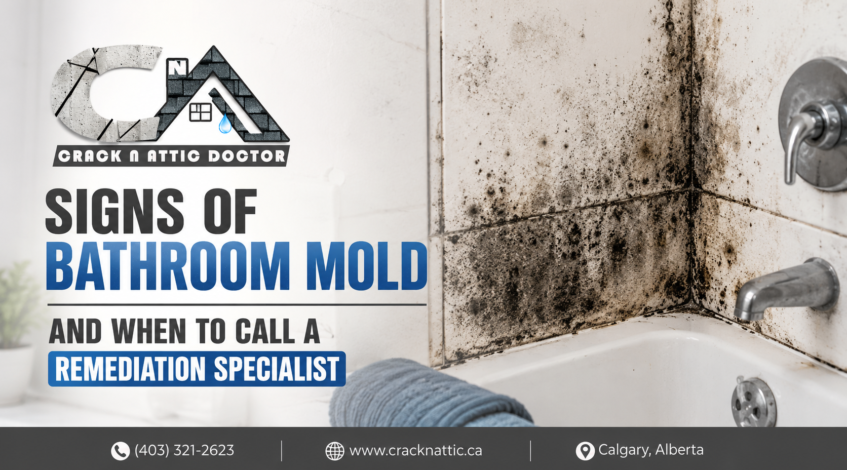
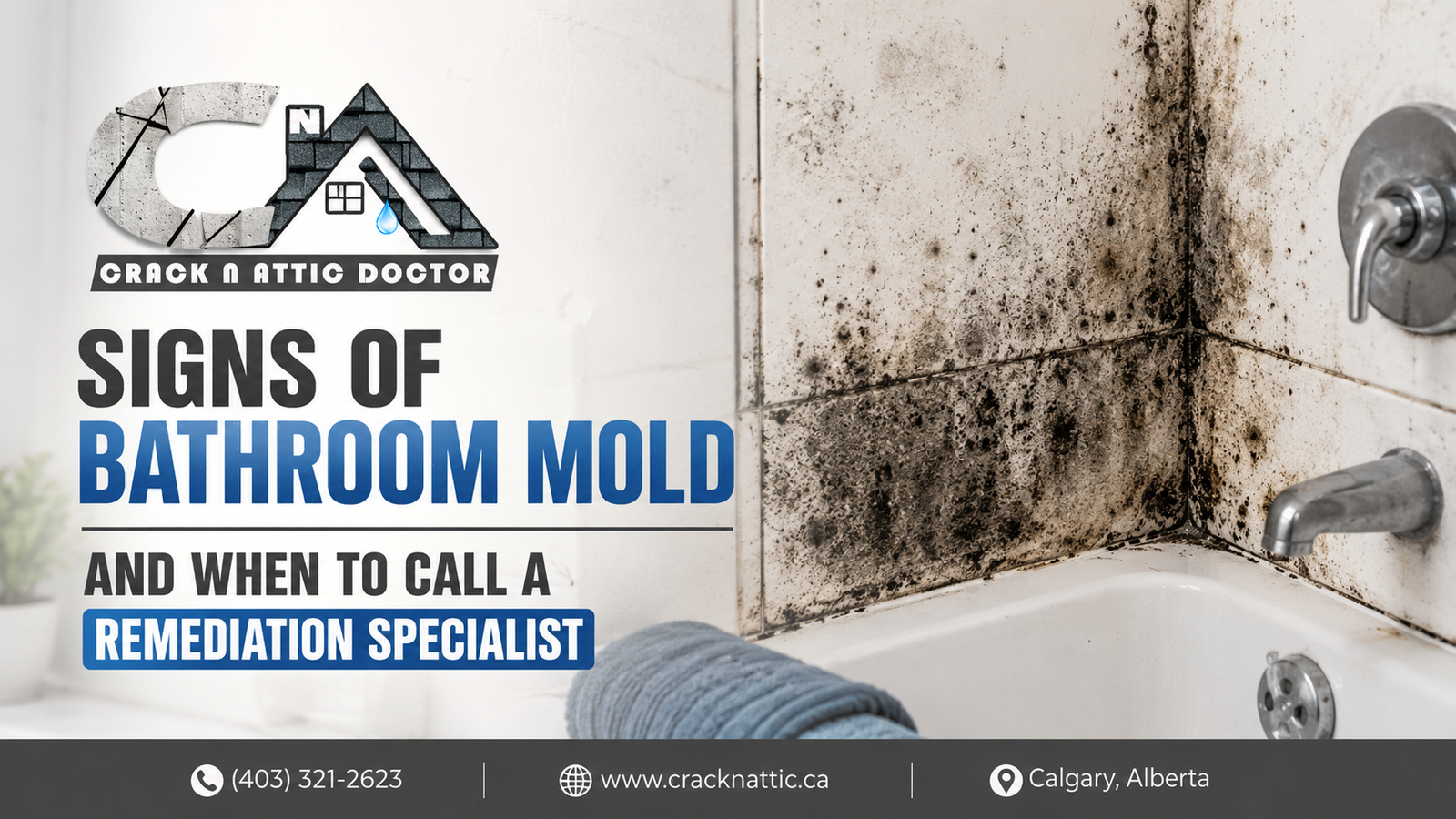
Bathrooms are ground zero for household mold growth. With constant steam from showers, splashing water, and high daily humidity, your bathroom offers the perfect moist environment for toxic spores to thrive.
While a small spot of surface mildew on grout can often be wiped away, persistent or hidden mold poses serious risks to your health and your home’s structural framing. Knowing how to spot early warning signs—and knowing when a DIY fix is no longer safe—can save you thousands in major repairs.
At Crack & Attic Doctor, we specialize in identifying and eliminating hidden moisture issues throughout your building envelope. Here are the clear signs of bathroom mold and when it is time to call in a professional remediation specialist.
1. Early Warning Signs of Bathroom Mold
Mold does not always appear as obvious black patches on your tile. Often, it grows behind walls, under subflooring, or inside exhaust ducting long before it becomes visibly obvious.
Watch out for these common warning signs:
-
Persistent Musty Odors: If your bathroom smells earthy, damp, or stale even after a thorough cleaning, mold is likely growing out of sight behind walls or under the vanity.
-
Discolored or Crumbling Grout and Caulk: Dark green, black, or brown spots that keep returning through silicone sealant or tile grout indicate deep-rooted spores.
-
Peeling Wallpaper or Blistering Paint: Moisture trapped behind drywall causes paint to bubble and wallpaper adhesive to fail, revealing mold growth underneath.
-
Soft or Spongy Flooring: If your bathroom floor feels soft or squishy near the tub, shower, or toilet, water has seeped into the subfloor, creating ideal conditions for hidden rot and mold.
-
Unexplained Respiratory Symptoms: Chronic coughing, sneezing, skin irritation, or eye watering that worsens after taking a shower is a strong indicator of elevated airborne spore counts.
2. Why Bathroom Mold Spreads: Humidity and Ventilation Failures
Bathroom mold rarely exists in isolation. It is usually the direct result of ventilation flaws or hidden plumbing leaks.
-
Weak Exhaust Fans: If your bathroom fan is undersized, clogged, or vented improperly into your attic cavity, humid air gets trapped. Instead of escaping outside, high humidity settles on walls and ceilings or feeds attic mold. Understanding why insulation alone won’t solve your attic rain problems highlights how improper moisture exhaust impacts your entire house.
-
Hidden Plumbing Seepage: A slow leak behind a shower surround, underneath a sink, or around a toilet seal can saturate drywall and subflooring silently over weeks or months.
-
Stack Effect Air Transfer: Trapped bathroom moisture naturally rises. If your upper levels or roof cavity lack proper ventilation, bathroom humidity accelerates moisture buildup elsewhere in the home.
3. DIY Cleaning vs. Professional Remediation: When to Call the Experts
Can you clean bathroom mold yourself? It depends on the size and location of the infestation.
When DIY Is Okay:
-
The mold covers a small, non-porous area (less than 10 square feet, or about a 3×3 foot patch).
-
It is strictly surface mildew on glass, metal, or non-porous tile.
-
There are no hidden leaks or structural rot involved.
When to Call a Remediation Specialist:
-
Large Surface Area: The mold infestation covers more than 10 square feet.
-
Growth on Porous Materials: Spores have penetrated porous materials like drywall, ceiling tiles, insulation, or wooden subflooring. Surface cleaning will not kill deep-rooted mold roots.
-
Repeated Recurrence: Mold keeps returning despite regular cleaning with anti-microbial treatments, indicating an unaddressed moisture source.
-
Health Symptoms Present: Family members experience persistent allergies, respiratory issues, or fatigue linked to indoor air quality.
-
Hidden Leak Damage: Mold is spreading behind shower walls, under bathtubs, or into adjacent wall cavities.
4. The Crack & Attic Doctor Solution: Complete Microbial and Moisture Control
Simply spraying bleach on toxic mold does not fix the root issue—it only temporarily bleaches the surface while leaving active spores in porous materials. The Crack & Attic Doctor Solution delivers complete, permanent elimination:
-
Comprehensive Inspection & Thermal Imaging: We pinpoint hidden moisture sources behind walls, under floors, and within exhaust ducts using non-invasive diagnostic tools.
-
Certified HEPA Mold Remediation: We isolate the affected zone under negative pressure, safely removing contaminated materials and running HEPA-filtered air scrubbers to purify your indoor air.
-
Ventilation & Structural Sealing: We resolve the underlying moisture failure by optimizing exhaust fan ducting, sealing leaks, and ensuring your building envelope handles moisture safely.
Whether you need targeted mold elimination or a comprehensive waterproofing service Calgary strategy for foundation protection, maintaining a dry home safeguards your family’s health and equity.
✅ Book Your Free Mold & Moisture Assessment Today!
Do not ignore musty smells or persistent dark spots in your bathroom. Protect your family’s respiratory health and prevent costly structural damage. Contact our experienced local team today to schedule your free, no-obligation mold assessment!
📞 Contact Southern Alberta’s Building Envelope Specialists
-
Main Office Line: (403) 633-6616 📱
-
Direct Tech Line: (587) 830-0840 📱
-
Official Website: www.cracknattic.ca 🌐
-
Email: crackandatticdoctor@gmail.com 📧
-
Office Address: #1, Second Floor – 32 Westwinds Crescent NE, Calgary, Alberta 📍
-
Proudly Serving: Calgary, Airdrie, Chestermere, Cochrane, Okotoks, High River, and surrounding Southern Alberta areas.
Leave a Reply