Every homeowner dreads that moment: moving a storage box in the basement and discovering a jagged line running down the concrete wall. Your first instinct might be to reach for a tube of caulk or to assume the house is about to collapse.
In Calgary, where soil expansion and freeze-thaw cycles are the norm, basement cracks are common—but that doesn’t mean they are all harmless. At Crack & Attic Doctor, we help you cut through the anxiety to understand exactly what that crack is telling you.
The “Seal It” Category: Non-Structural Cracks 🛡️
Most cracks fall into this bucket. They are the result of the natural curing process of concrete.
-
Hairline Shrinkage Cracks: As concrete dries, it shrinks. These cracks are usually thin, vertical, and don’t change over time.
-
Settlement Cracks: Occur when a home settles slightly in its first few years. These are usually narrow and stable.
The Fix: While these aren’t structural threats, they are moisture magnets. Even a tiny crack can let in radon gas, humidity, and liquid water. We recommend a Polyurethane Injection to seal them permanently. It’s a “peace of mind” fix that prevents a small nuisance from becoming a big headache.
The “Panic” Category: Structural Red Flags 🚨
These are the cracks that require an immediate call to a specialist. If you see these, do not try to patch them yourself—you are merely masking a deeper structural movement.
-
Horizontal Cracks: This is the “big one.” A horizontal crack indicates that the wall is bowing inward due to immense lateral soil pressure. If left untreated, the wall can eventually buckle.
-
Stair-Step Cracks (Widening): If the cracks follow the mortar joints in a block foundation and are wider than a nickel, it means the foundation is shifting unevenly. This often points to a serious drainage or soil support issue.
-
Diagonal Cracks Over 3mm: A diagonal crack that runs from the corner of a window or door frame suggests that your foundation is undergoing significant differential settlement—the corners of your house are sinking at different rates.
The “Calgary Climate” Factor 🏔️🌡️
In 2026, we’ve seen that Calgary’s extreme Chinook cycles have turned many “minor” cracks into “major” ones. Because the concrete is being hammered by thermal shock, a crack that was “safe” last year might be actively growing today.
The “Doctor’s” Rule of Thumb: * If it’s vertical, thin, and dry: It’s a maintenance item. Seal it to prevent water.
-
If it’s horizontal, diagonal, or leaking: It’s a structural concern. Call for a professional assessment.
Why You Shouldn’t Use “Hardware Store” Fixes 🧱❌
Hardware store hydraulic cement is rigid. When your house moves (and in Calgary, it will move), that patch will crack or pop right out.
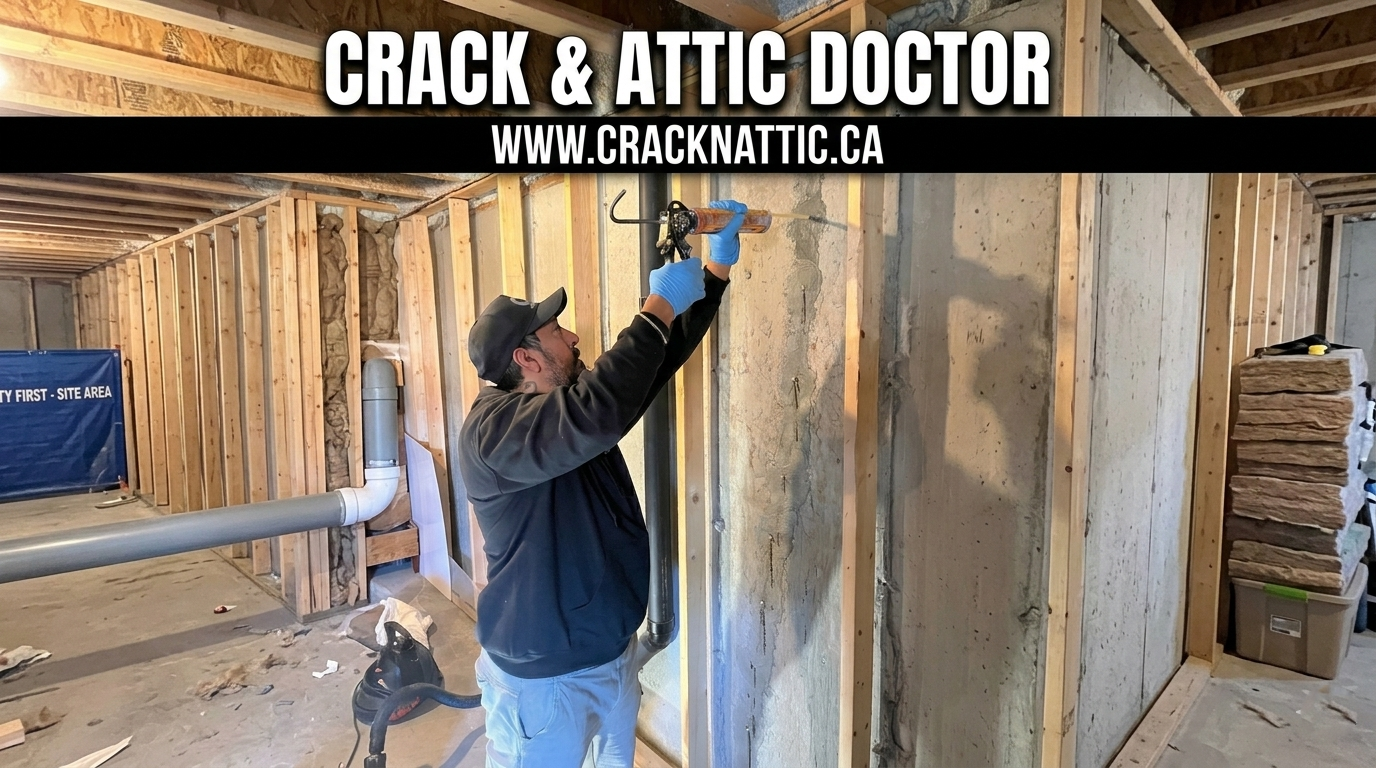
Our 2026 Polyurethane Injection process creates a flexible, rubber-like seal that stays bonded to the concrete. It moves with your house, ensuring the seal holds tight through the harshest Calgary winters and the wildest Chinook swings.
Don’t Guess—Get a Professional Assessment 📞🚑
Don’t let fear or neglect dictate the health of your foundation. If you’re unsure about a crack, we offer professional inspections to identify if you’re looking at a standard shrinkage crack or a structural emergency.
-
Phone: (403) 321-2623 📱
-
Email: crackandatticdoctor@gmail.com 📧
-
Website: www.cracknattic.ca 🌐
-
Visit Us: 📍 715, 100, 4th Av SW | 📍 #1, 32 Westwinds Crescent NE, Calgary
Leave a Reply